
Jump To Section
- 1 What Does AI-assisted Modernization Mean for Telecoms?
- 2 How Telecoms Can Modernize Through AI-Assisted Engineering
- 3 The Opportunity: How AI Can Bridge the Legacy–Modern Gap
- 4 The Rise of Agentic AI in the Telecom Industry
- 5 The Solution: AI-Assisted Engineering
- 6 Telecom Trends Shaping AI-Assisted Modernization in 2025 and Beyond
- 7 Business and Operational Impact of AI-assisted Engineering
- 8 Final Takeaways: Leading the Future of Telecom
Telecom stands at a crossroads between the pressure to deliver lightning-fast connectivity and the burden of decades-old systems built for a slower, more predictable world. OSS/BSS platforms, field operations, and network management systems have long been the backbone of global connectivity: solid, reliable, but stubbornly slow to evolve.
Now, as 5G, cloud-native infrastructure, and AI-driven operations become the industry’s new DNA, the question isn’t whether telcos should modernize but how fast and how intelligently they can do it.
Artificial Intelligence is no longer a futuristic experiment; it’s becoming the invisible engineer behind telecom transformation. What began as AI-driven automation has evolved into AI-assisted engineering, an ecosystem of intelligent agents that can test, analyze, and optimize network systems autonomously.
This new paradigm doesn’t replace engineers, it amplifies them. By embedding intelligence into the very fabric of testing, deployment, and operations, AI-assisted engineering helps telcos modernize safely, scale faster, and operate smarter than ever before.
In this article, you’ll find a clear breakdown of the top telecom trends shaping AI-assisted modernization in 2026 and beyond. Drawing from emerging industry research, real-world implementation insights, and the evolving capabilities of agentic AI, these are the ten trends every telecom leader needs to track.
By the time you’re done reading, you’ll learn why these trends matter now, how they translate into concrete modernization priorities, and a clear understanding of how to prepare your engineering, operations, and digital teams for what’s next.
What Does AI-assisted Modernization Mean for Telecoms?
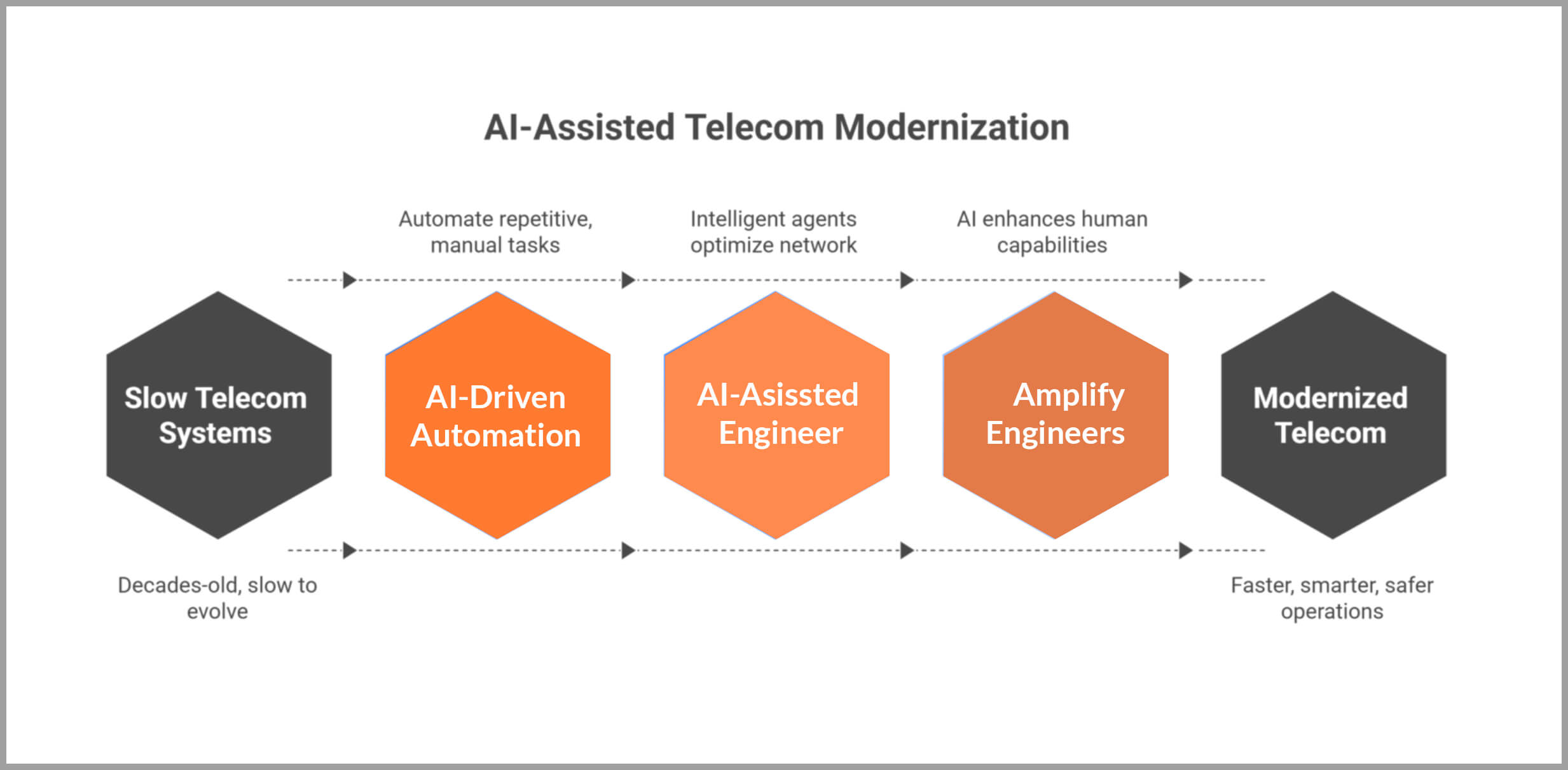
AI-driven automation focuses on using artificial intelligence to execute predefined, repetitive tasks faster and more efficiently, such as running tests, processing data, or triggering alerts. It’s about doing what we already do, but smarter.
AI-assisted engineering, on the other hand, goes a step further. It introduces collaborative intelligence, where AI systems don’t just automate actions but actively understand, reason, and co-create alongside human engineers. These systems interpret documentation, generate code, build test cases, suggest optimizations, and even validate their own outputs.
In telecom, this means moving from rule-based automation that follows instructions to an intelligent ecosystem that thinks with you, anticipating faults before they happen, generating tests from requirements, and continuously improving network reliability through data-driven learning. AI-assisted engineering isn’t about replacing human expertise; it’s about amplifying it, making every engineer faster, every process smarter, and every network more adaptive.
How Telecoms Can Modernize Through AI-Assisted Engineering
For years, telecom networks have carried out the same paradox; innovation at the edge, inertia at the core. Behind every new 5G launch or digital service lies a tangle of legacy stacks, manual testing, siloed data systems, and compliance frameworks that slow transformation to a crawl.
Every update means weeks of regression testing. Every device certification demands pages of documentation. Every customer-facing improvement must pass through layers of technical checks before it ever reaches a user’s phone.
In a world where 5G users expect instant provisioning, and enterprises demand zero downtime, telcos face a modern truth: you can’t build the digital infrastructure of tomorrow on the processes of yesterday. That’s where AI-assisted engineering steps in; not as a single tool, but as an intelligent ecosystem capable of accelerating modernization across the network, from testing to certification, operations, and customer experience.
The Weight of Legacy Systems
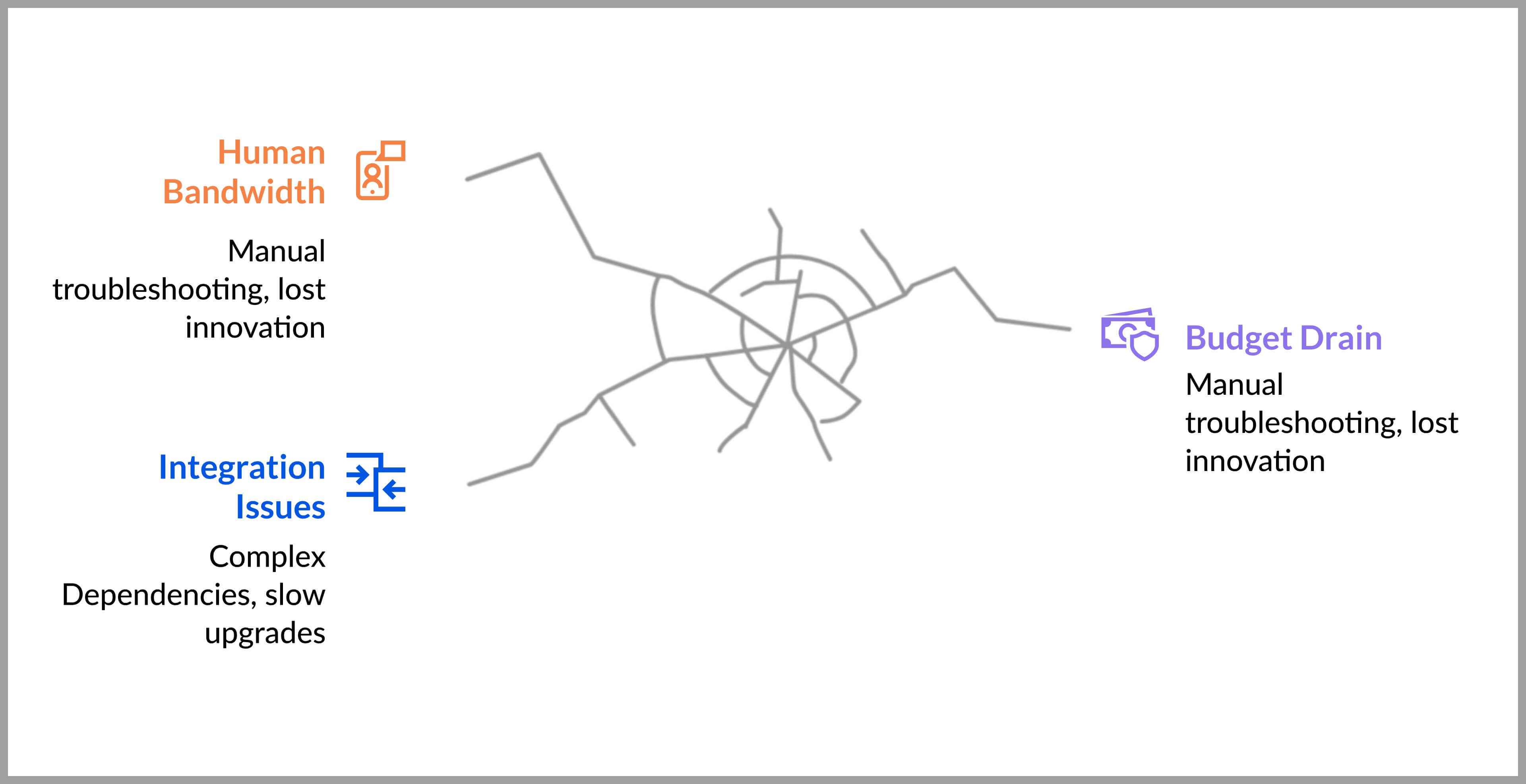
Legacy OSS/BSS systems still power critical services: billing, provisioning, and assurance. But integrating these with 5G, IoT, and edge platforms is like rebuilding an airplane mid-flight. The complexity of dependencies and aging interfaces makes even minor upgrades risky and slow.
This AI playbook enables telcos to modernize legacy billing systems in 4 steps: The 4-Step AI Playbook for Telcos to Modernize Legacy Billing Systems
The Human Bandwidth Problem
Telecom expertise is deep but finite. Certification engineers, testers, and network specialists spend hours resolving repetitive queries, scoping test cases, and navigating documentation. Every hour spent on manual troubleshooting is an hour lost on innovation.
The Cost of Delay
Industry reports show that up to 40% of telecom modernization budgets are drained by repetitive testing and documentation processes. As networks become more software-defined, the need for continuous, intelligent testing has never been greater, yet traditional methods can’t keep up.
The Opportunity: How AI Can Bridge the Legacy–Modern Gap
The telecom backbone was never designed to think for itself; until now.
AI-assisted engineering introduces a new kind of intelligence into the system: one that doesn’t just execute, but understands, predicts, and adapts.
Instead of engineers manually writing test plans, reconciling documents, or analyzing historical network issues, AI Agents step in as digital collaborators. They learn from past data, interpret requirements, and automate the tedious but critical parts of engineering, from certification to optimization.
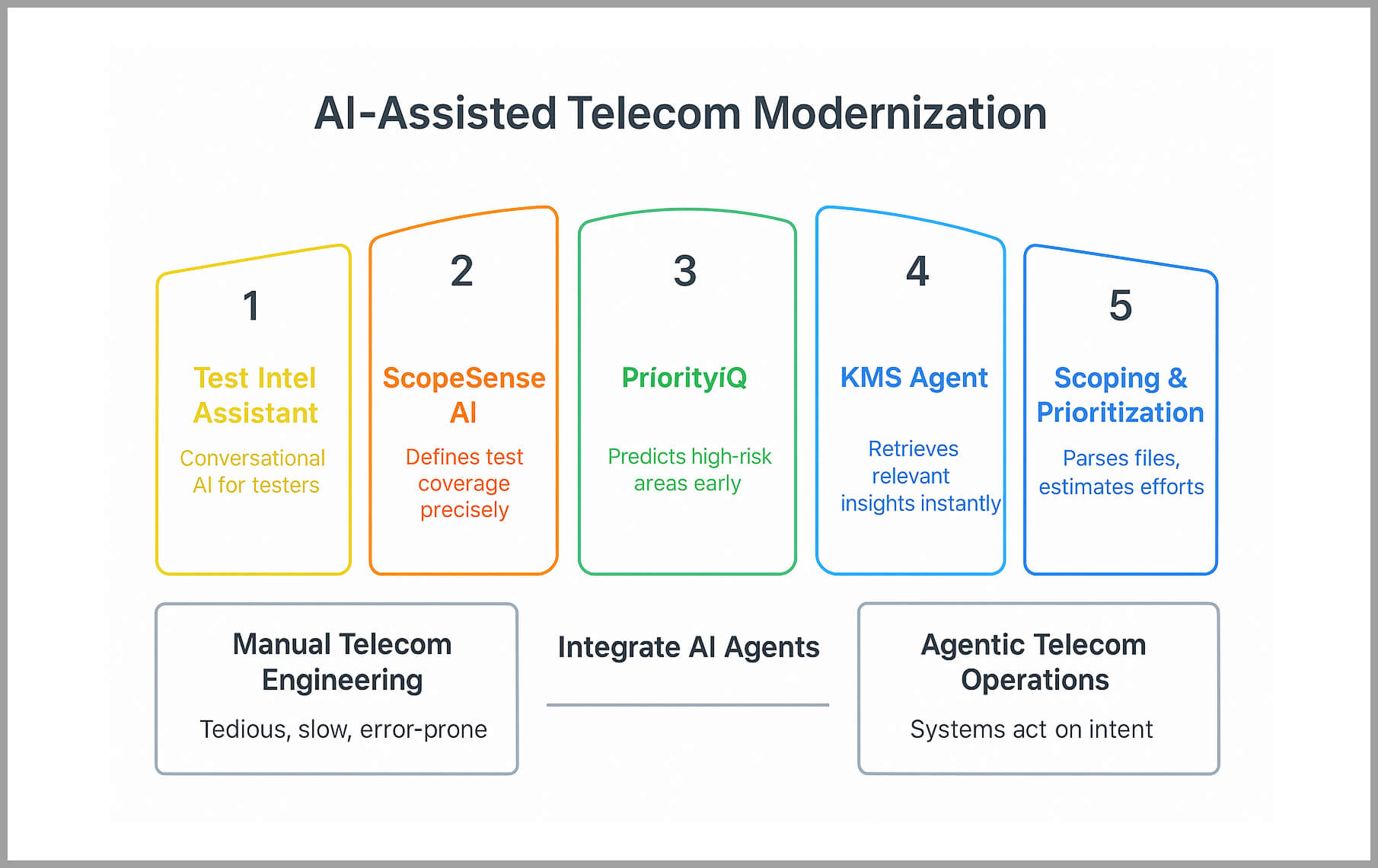
Take AI-assisted ecosystem as an example. Within its managed testing service, a family of intelligent agents works together to transform every stage of the testing lifecycle:
- Test Intel Assistant
A conversational AI for testers, answering technical questions, diagnosing failures, and providing instant insights, reducing dependency on senior SMEs and slashing onboarding time. - ScopeSense AI
An intelligent scoping agent that reads BRDs, compliance docs, and network specs to define test coverage with unmatched precision, ensuring no requirement is overlooked. - PriorityIQ
A predictive prioritization agent that uses historical test data to identify high-risk areas early, focusing effort where it matters most. - KMS Agent
A knowledge-management agent that builds a vectorized memory of all test artifacts and instantly retrieves relevant insights for any query. - Scoping & Prioritization Agents
Autonomous agents that work in tandem with KMS to parse test files, estimate efforts, and rank test cases based on past issue probability.
Together, they represent the next evolution of telecom operations: Agentic AI, where systems act not just on instructions, but on intent.
The Rise of Agentic AI in the Telecom Industry
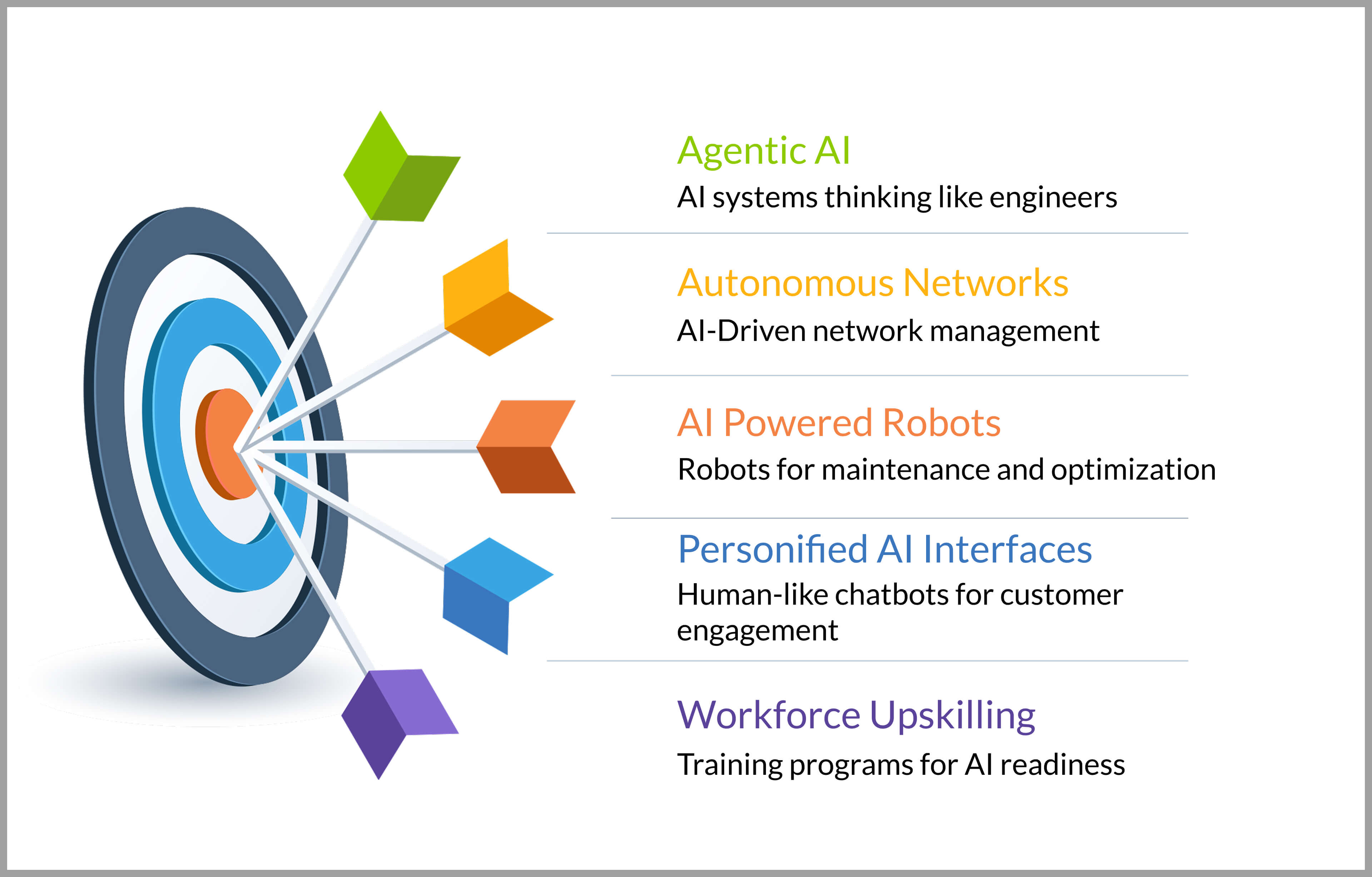
By 2025, Deloitte predicts that 25% of GenAI-enabled enterprises will launch agentic AI pilots, rising to 50% by 2027. In telecom, 84% of executives already believe these AI agents will fundamentally change how networks are built and maintained (Accenture).
Agentic AI is the bridge between automation and autonomy. It’s where AI systems start thinking like engineers: planning, deciding, and acting across multi-step processes.
In short, telecom’s modernization story is no longer about machines doing more; it’s about machines understanding more.
The Solution: AI-Assisted Engineering
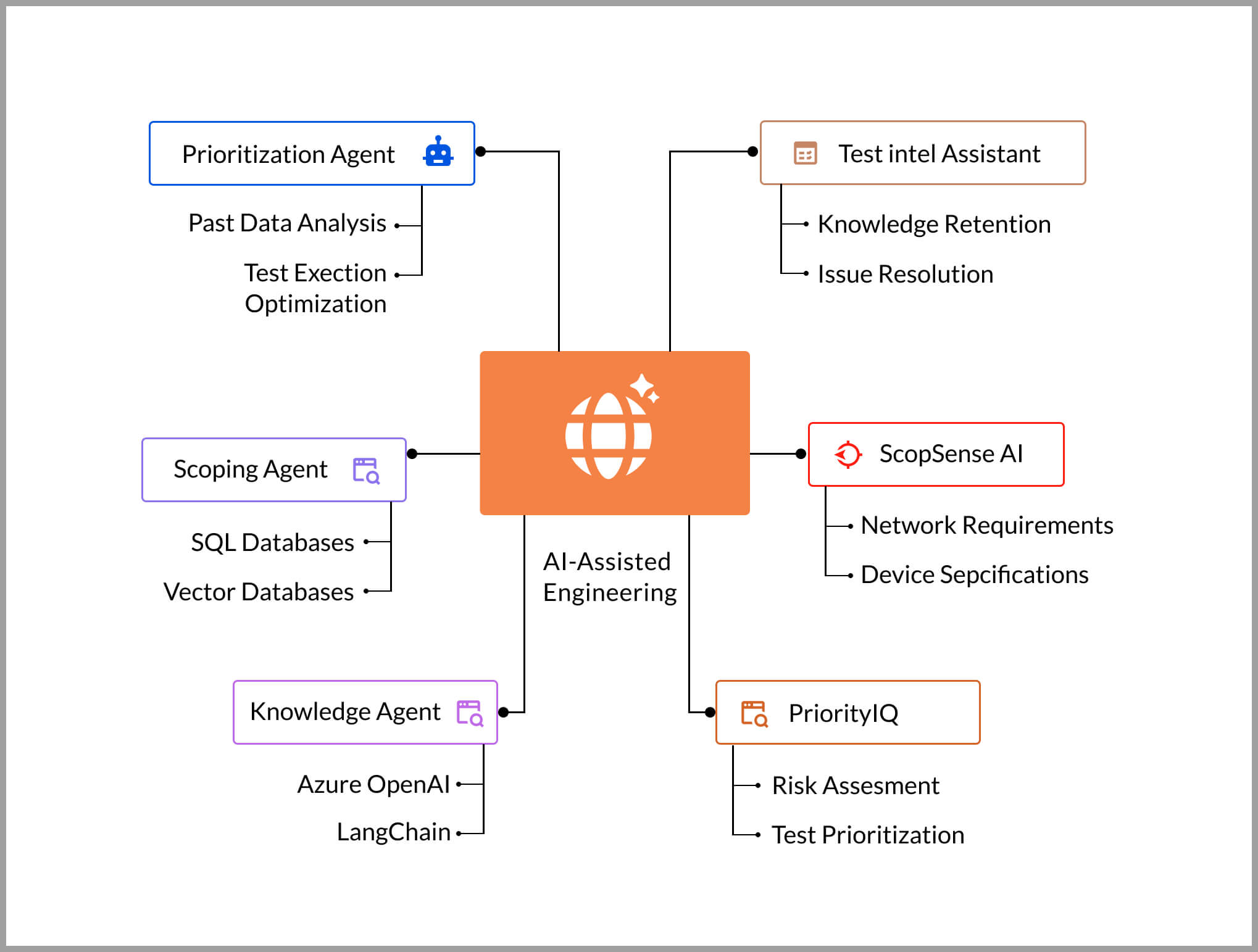
AI-assisted engineering is telecom’s new co-pilot. It orchestrates the entire modernization lifecycle, automating scoping, testing, and reporting while staying transparent, traceable, and secure.
We’ve built an ecosystem of AI Agents that mirrors this model, already proven through our AI-assisted ecosystem implementations. These agents don’t replace humans; they make human decision-making sharper, faster, and better informed.
Architecture in Action
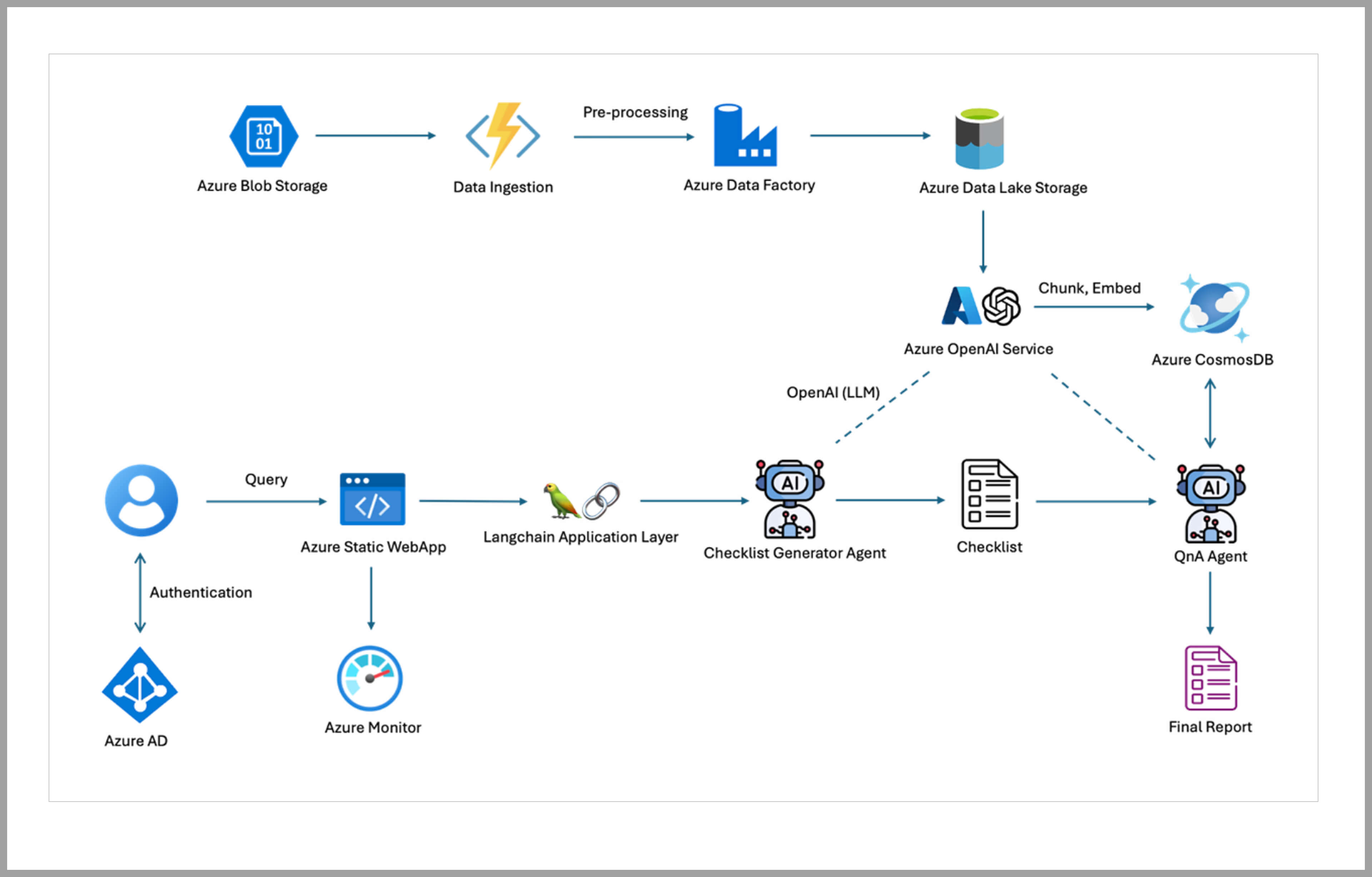
The Knowledge Agent prototype demonstrates how this framework comes to life:
- Azure Data Factory + Blob Storage handle ingestion of device and certification data.
- Azure OpenAI Service + LangChain enables natural language understanding and checklist generation.
- Cosmos DB (Vector) acts as the long-term memory for instant retrieval.
- Azure Static WebApp delivers a simple front-end experience where OEMs and internal teams can interact conversationally with the system.
This architecture isn’t just scalable, it’s future-proof. It can expand to support autonomous network monitoring, real-time compliance validation, or AI-driven documentation across multi-vendor environments.
AI Agents and Supporting Technologies
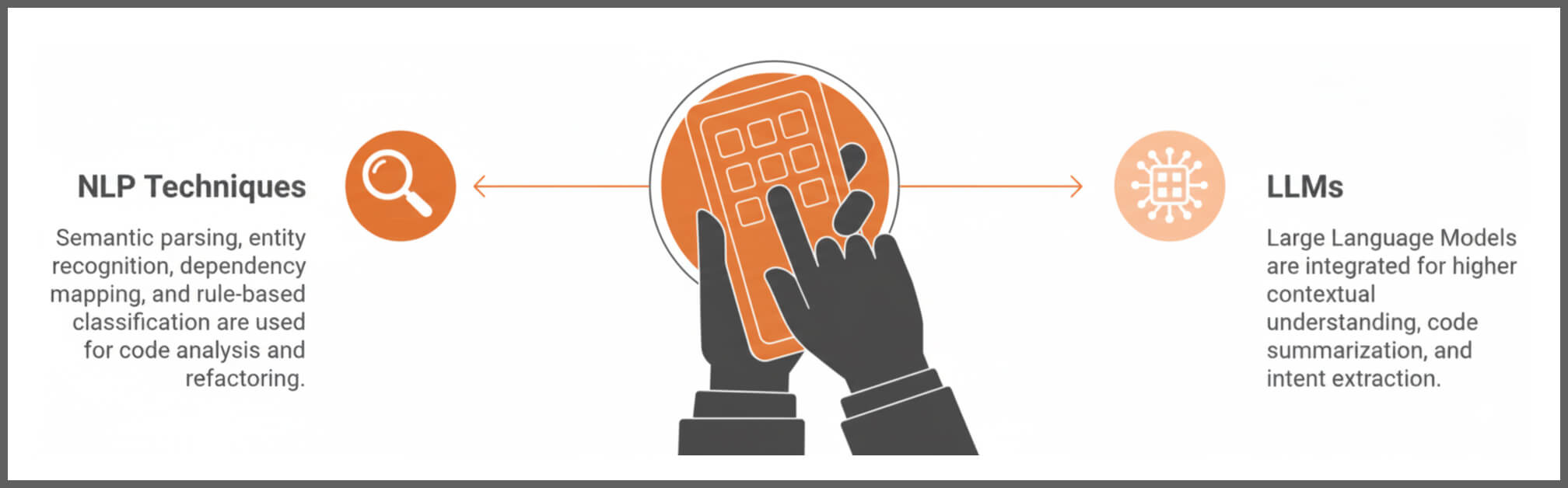
In telecom, trust, uptime, and security aren’t optional; they’re existential. That’s why our AI-assisted engineering framework uses a hybrid intelligence model, blending Natural Language Processing (NLP) for precision with Large Language Models (LLMs) for contextual reasoning.
When explainability and control are critical; such as parsing device specifications, compliance documents, or certification workflows; the agents operate in NLP mode. Here, deterministic methods like entity recognition, dependency mapping, and semantic parsing ensure every recommendation is traceable and auditable within a closed environment.
But when the task demands deeper understanding; interpreting unstructured logs, summarizing complex fault patterns, or generating natural language test documentation; the system intelligently switches to LLM mode. This mode leverages contextual reasoning and pattern recognition to understand the “why” behind the data, not just the “what.”
This approach mirrors the evolution of modern telecom networks themselves; structured where reliability is key, adaptive where intelligence drives the edge.
Telecom Trends Shaping AI-Assisted Modernization in 2025 and Beyond
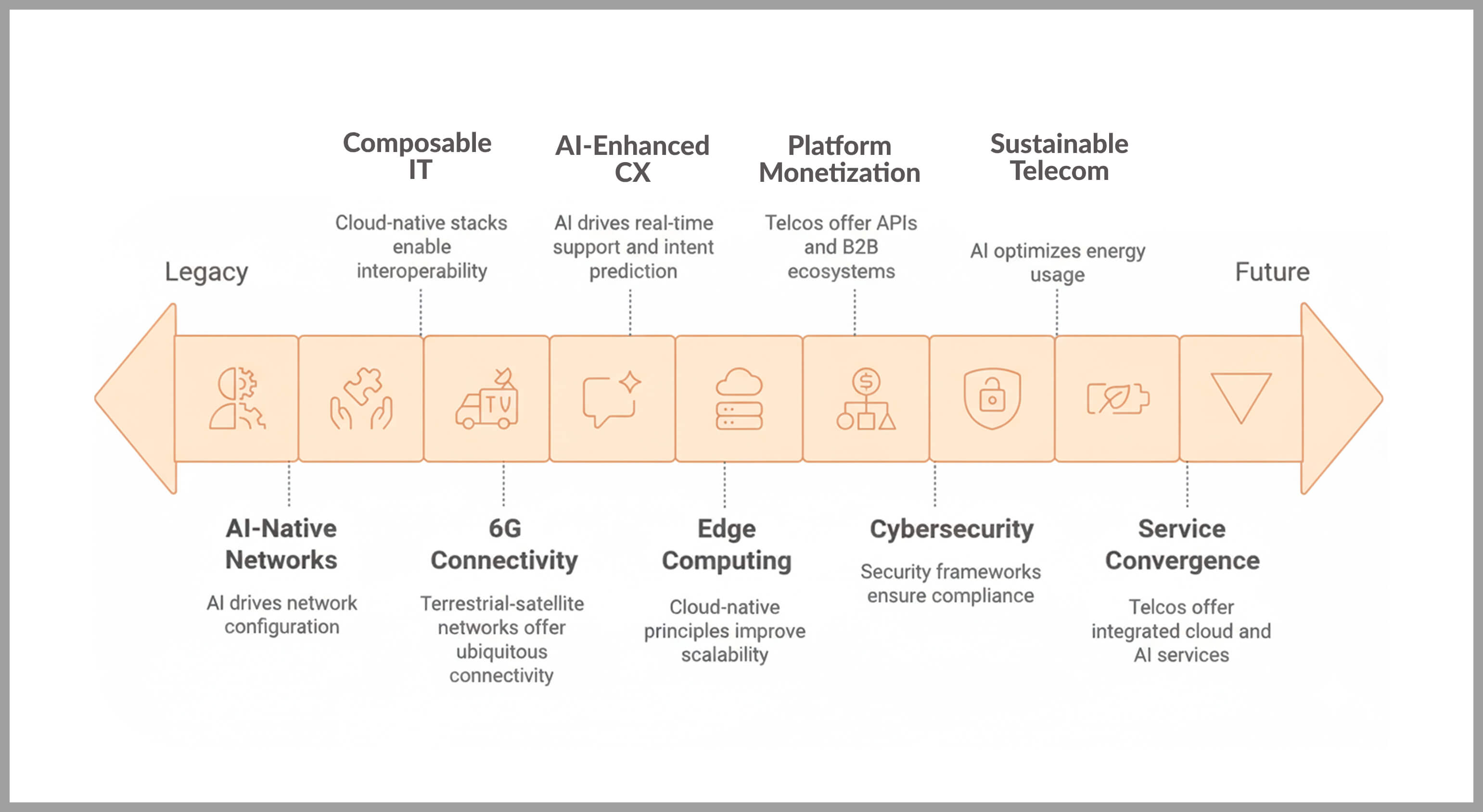
The following global trends reinforce why AI-assisted engineering is not a distant vision but telecom’s immediate reality:
1. AI-Native and Autonomous Networks
Telecom operators are shifting from network automation to full autonomy. AI and machine learning now drive network configuration, fault prediction, and performance optimization. TM Forum lists “Autonomous Networks” as a key industry mission, predicting large-scale adoption by 2026.
Strategic Implication:
Operators must invest in AI-Ops, cross-domain orchestration, and data integration layers to reduce OPEX and deliver zero-touch service management.
2. Composable IT and Open Digital Architecture (ODA)
Legacy OSS/BSS systems are being replaced by modular, cloud-native stacks. TM Forum’s ODA initiative enables interoperability and composable business functions. This architecture accelerates product launches and partner ecosystem integration.
Strategic Implication:
Telcos need to embrace composable IT to build “Telco-as-a-Service” platforms, allowing faster innovation cycles and partner-driven monetization.
3. The Rise of 6G and Multi-Orbit Connectivity
Research into 6G and terahertz communication is advancing, while satellite providers (e.g., Starlink, OneWeb) expand global coverage. The future lies in hybrid terrestrial-satellite networks offering ubiquitous connectivity.
Strategic Implication:
Operators must start preparing for spectrum policy, infrastructure investment, and multi-orbit partnerships to stay relevant in the 6G era.
4. AI-Enhanced Customer Experience (CX)
Customer experience has moved beyond personalization toward predictive and generative AI-driven engagement. From real-time support agents to intent prediction, telcos are re-engineering CX journeys.
Strategic Implication:
Data-driven CX powered by generative AI and unified customer data platforms (CDPs) will differentiate telcos in an increasingly commoditized market.
5. Edge, Cloud-Native, and Network Disaggregation
Telcos are embracing cloud-native principles, virtualized RAN, and edge computing to deploy services faster. This transition improves scalability and enables low-latency applications like AR/VR and industrial IoT.
Strategic Implication:
Investing in cloud-edge orchestration and vendor-agnostic network layers is critical for agility and cost efficiency.
6. Platform Monetization and Ecosystem Models
Connectivity alone no longer sustains growth. Telcos are moving toward digital platforms—offering APIs, marketplaces, and B2B ecosystems. This approach mirrors hyperscaler strategies (AWS, Azure).
Strategic Implication:
Monetization will shift from data plans to “value-per-API” or “revenue-sharing ecosystems,” requiring strong developer engagement and partner governance models.
7. Cybersecurity, Trust, and Data Sovereignty
As networks open through APIs and partnerships, attack surfaces expand. Security, compliance, and AI governance frameworks (zero-trust, data residency, AI governance) are becoming competitive differentiators.
Strategic Implication:
Operators must embed cybersecurity into the network fabric and create transparent trust models to ensure compliance and customer confidence.
8. Sustainable and Responsible Telecom
Green network initiatives, using AI for energy optimization and circular-economy practices, are growing. Telcos like Vodafone and Telefónica are setting carbon-neutral goals by 2030.
Strategic Implication:
Embedding sustainability into operations not only meets ESG goals but also appeals to regulators, investors, and climate-conscious customers.
9. Convergence of Telecom and IT Services
Boundaries between telco, IT, and cloud providers are dissolving. Partnerships with hyperscalers (e.g., Google Cloud, AWS, Microsoft) enable joint service innovation and shared infrastructure.
Strategic Implication:
Telcos must reposition as digital service providers (DSPs), offering integrated cloud, AI, and connectivity portfolios.
10. Workforce Transformation and AI-Augmented Operations
As automation deepens, skill requirements shift toward AI governance, data science, and orchestration. Leading telcos are creating “AI Centers of Excellence” to reskill their workforce.
Strategic Implication:
Investing in upskilling programs and human-AI collaboration frameworks will future-proof telcos’ operational capabilities.
Business and Operational Impact of AI-assisted Engineering
The benefits of AI-assisted engineering in telecom are already measurable:
| Area | Traditional Approach | AI-Assisted Outcome |
| Testing Efficiency | Manual planning and regression cycles | Up to 50% faster test execution via intelligent scoping and prioritization |
| Knowledge Retention | Tribal SME knowledge, siloed data | Centralized AI knowledge hub accessible 24/7 |
| Time-to-Market | Weeks of test cycles and documentation reviews | Automated validation and reporting accelerate launch timelines |
| Cost Optimization | High manual effort and redundant tests | Reduction in redundant tests and onboarding costs |
| Employee Experience | Repetitive, low-value tasks | Engineers focus on innovation and high-impact problem-solving |
By turning repetitive testing and documentation into intelligent automation, telcos move from reactive firefighting to proactive innovation.
Final Takeaways: Leading the Future of Telecom
The telecom industry has been entering its most transformative decade since the dawn of mobile broadband. AI-Assisted Engineering and Agentic AI are no longer experimental; they’re the tools rewriting how networks are designed, tested, and evolved. Strategic takeaways for telecom leaders include:
- AI-Assisted Engineering is the foundation for self-evolving telecom systems.
- Agentic AI will redefine how networks operate shifting from reactive automation to autonomous orchestration.
- Hybrid Intelligence (LLM + NLP) ensures compliance, accuracy, and creativity coexist.
Telecom’s evolution has always been about connecting people now, it’s about connecting intelligence. With AI-assisted engineering, that connection becomes self-learning, self-healing, and endlessly adaptive.
The telecom leaders who will succeed in 2026 will not be those preparing for these trends but the ones already building within them, with AI Agents in pace for telecom testing, certification, and knowledge management that directly align with the global move toward automation, autonomy, and intelligence.